
Want the latest retirement plan adviser news and insights? Sign up for PLANADVISER newsletters.
Data & Research October 2, 2025
74% Report Difficulty Saving for Retirement, per Goldman Sachs
Living paycheck-to-paycheck is a reality for 42% of surveyed Generation X, Millennial and Generation Z workers.
Reported by Emily Boyle
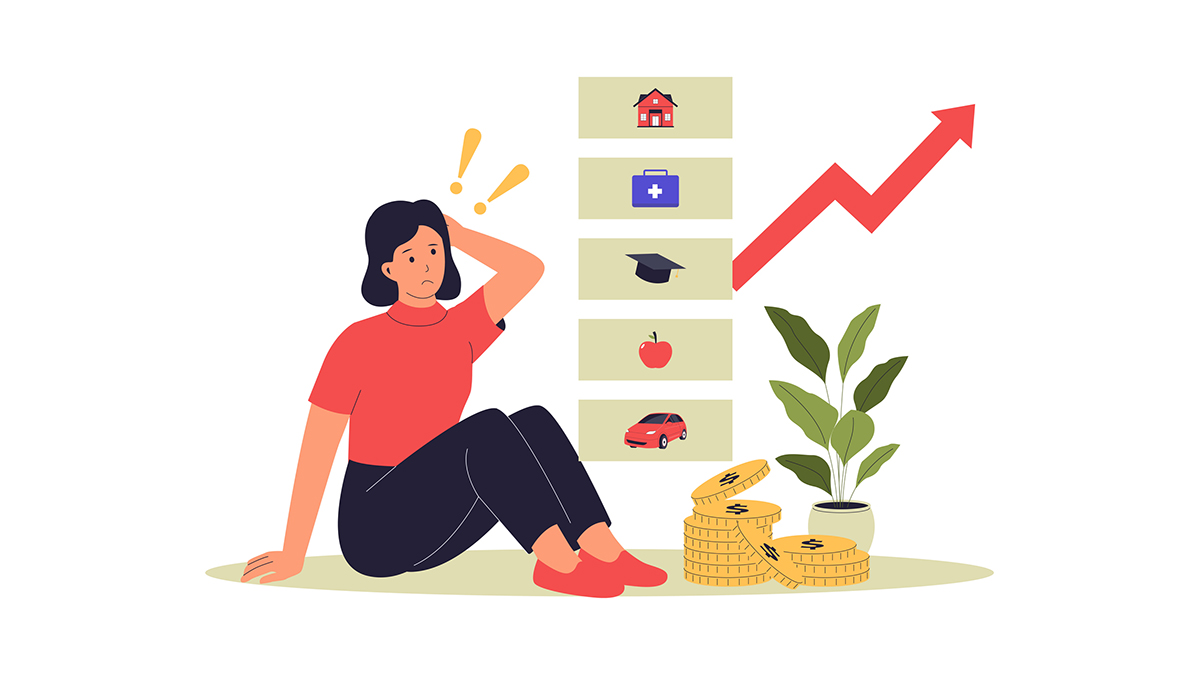
According to the 2025 Goldman Sachs Asset Management Retirement and Survey and Insights Report, “New Economics of Retirement,” released Wednesday, 42% of Generation Z, Millennials and Generation X state they are living paycheck-to-paycheck, and nearly three-quarters (74%) report struggling to save for retirement due to competing financial priorities.
Fifty-five percent of workers may be living paycheck-to-paycheck by 2033, and 65% by 2043, Goldman Sachs predicted, raising the question of whether retirement is growing unaffordable for many. Meanwhile, 66% of Gen Z and 59% of Millennials surveyed reported having experienced at least one major life event—including buying a new home, divorce, marriage or sending a child to college—within the past two years. As a result, 70% of respondents reporting a life event either paused retirement saving contributions, took a retirement plan loan or planned to retire later.
“These findings force us to ask a very critical question: does the retirement math still work?” said Greg Wilson, head of retirement at Goldman Sachs Asset Management, during a webinar held October 1. “The answer is no. Telling workers just to save more ignores the realities they face.”
Competing Priorities
Nearly 70% of savers Goldman Sachs surveyed said they are on track or better for retirement—however, about 60% expect to outlive their savings. The company called the data disconnect an “optimism gap,” driven by the reality that many savers have not yet encountered the full spectrum of clashing financial pressures.
In addition, the growth of competing priorities and structural changes have shown strong alignment across generations, the company found. On average, approximately 30% of working Baby Boomers reported that competing priorities materially constrain their retirement savings. The proportion rises to 50% for Gen X, exceeds 75% for Millennials and remains above 70% for Gen Z.
Plan sponsors were similarly concerned about their employees’ ability to save for retirement based on competing priorities. Nearly 60% of plan sponsor respondents stated that competing priorities, such as paying down loans, saving for college and caring for and financially supporting family members, were the top barriers they believe prevented their employees from saving sufficiently for retirement.
The cost of home ownership went up to 51% of the median household income in 2025 from 33% of the median household income in 2000, an 18-percentage-point increase. Over the same period, the cost of public college went up to 26% of income from 25% of income, and the cost of private college rose 20 percentage points, to 85% from 65%.
The Good and the Bad
Goldman Sachs’ retirement savings-to-income ratio benchmark showed “shortcomings” for Gen X and Boomers but “good progress” for Millennials and Gen Z, according to the report. The ratio, which compares current income to retirement assets saved, projects the necessary retirement savings amount relative to annual income each year. Gen Z reported a savings-to-income ratio of 1.18, compared with an expected benchmark of 0 to 0.6., while Baby Boomers reported a ratio of 3.35 compared with a benchmark of 9.4 to 11.3.
Goldman Sachs noted that for Gen X, this often stems from being among the first generation to navigate a retirement system largely without traditional pensions. But the “younger cohorts are still early in their careers and may face unique challenges with the financial vortex, potentially impacting their long-term savings trajectory,” the report stated.
Savings are increasing generally, however: 55% of respondents reported having increased their retirement savings over the past year, while only 8% reported having reduced them. However, the research also found that intended retirement income targets may be too low to sustain current lifestyles. A large share of respondents aim to be able to provide themselves less than 50% of working income in retirement, and only a minority reported aiming to have more than 70%.
“Together, these findings suggest savers are making progress, but may need to recalibrate income goals, stress-test plans under adverse scenarios, and consider strategies to better align retirement income with desired living standards,” the report stated.
Goldman Sachs also evaluated a range of retirement savings tactics to understand their impact on final retirement savings. Retirement savings were reported to be impacted 49% by financial grit, which the firm defines as a “blend of determination, ongoing growth and resilient optimism”; 27% by utilization of a personalized plan/retirement advice; 23% by insurance integrated into retirement income; and 14% each by having access to a 401(k) plan and by having a savings account early in life with at least $500 annual savings and earning 7% annual return between ages 1 and 20.
“Saving more is not the only answer that we need to bring to the market,” said Chris Ceder, senior retirement strategist at Goldman Sachs Asset Management, during the webinar. “[We’ll be] looking towards these different solutions so that we can help individuals who are facing these savings crunches.”
Goldman Sachs surveyed 3,588 working individuals, aged at least 21, and 1,514 retired individuals, aged at least 45, in July. The firm partnered with Escalent to survey 250 plan sponsors who work for an organization that offers a 401(k) or 403(b) plan to employees and has at least $300 million in plan assets.