
Want the latest retirement plan adviser news and insights? Sign up for PLANADVISER newsletters.
In Practice November 21, 2025
Turning Family Bonds Into Advisory Firm Continuity
Parents and children who work in the same retirement plan practice find strength in numbers.
Reported by Edward Rueda

For many retirement plan advisory firm owners, succession planning is deeply personal and often unaddressed. When firm owners who were planning to retire in the next decade were surveyed last year by Kestra Holdings, only 6% said they had a fully documented succession plan, and 41% feared clients would receive worse service after they left.
Succession plans involving family members have the potential for extra, interpersonal volatility. Only a small portion of advisory firms are kept within families—11% of surveyed advisers told fintech company SmartAsset in 2022 they planned to pass on their business to a family member. But it is possible for family members to keep the intergenerational drama out of the office.
Michael Kane, who founded Plan Sponsor Consultants, a Georgia-based retirement plan consulting firm, did not intend to have his daughter, Addie Kane George, join him. Their working relationship started indirectly, when Addie was in high school, excelling at mathematics and doing side research projects for her allowance.

Addie Kane George
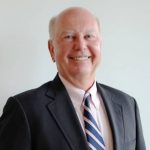
Mike Kane
While studying physics at the University of Tennessee, George continued to help her father with research. In her words, “it started to click” when they worked on their first proprietary request for proposal together, and she realized the influence their partnership could have on clients and participants.
“We didn’t set out to be the father-daughter team. It just kind of became that,” says George. “The intention was the industry, and then as we grew, it evolved into a family business.”
Family succession seems to work best for advisers when it is grounded in genuine interest and competence, not obligation. Kane says his decision to sell his practice to Hub International in 2021 was driven partly by succession planning.
“It had to be a fit for me, but it had to be a fit for the team, and as importantly as anything else, it had to be a fit for Addie’s future,” he says.
Keeping It Professional
One common concern in family-run firms is blurring the lines between personal and professional relationships. Kane and George keep their home lives completely separate from the office, and Kane says he even had a client of 15 years who did not realize George was his daughter.
Professionalism even extends to language—George only calls her father “Mike” in the office—and Kane doesn’t notice it anymore.
“It kind of came naturally, because it started when we were in front of other people in the office,” George says. “I don’t even realize I do it now.”
The separation of personal and professional lives has recently been strained, as Kane and George deal with a long-term family illness and caretaking, but George says, “We can turn it off and focus on work and then switch gears. I think you have to compartmentalize that way.”
Keeping the personal and professional separate may also be easier in a larger practice where the working relationship is not direct.

Cameron Heger
Cameron Heger, a 2024 PLANADVISER Emerging Leader as a retirement plan adviser for Hub International who started his career in his father’s financial services firm, became interested in the retirement industry after observing senior adults without sufficient savings working low-paying jobs. He was not approached by his father, Steven Heger, but a company vice president, Ed Gimenez, who had been hired to build out the retirement plan practice.
“I wouldn’t really ever talk to [my father], unless it was like a sales opportunity. It was me always reporting up to Ed, and I felt like it made a good working relationship,” Heger says. “I’ve heard horror stories of father-son dynamics. It’s possible to have a great working relationship—I’m an example of it—but it depends on the people involved.”
Mentoring the Next Generation
Succession planning is not just about family—it is about building a pipeline of talent. Kane, who developed mentoring programs early in his career, sees this as vital for sustainability.
“There’s a long runway to developing expertise,” he says. “You’ve got to find the right person and then be willing to take them under your wing.”
Cameron Heger agrees, saying he got crucial moral and mental support from his father in his first days on the job, when he was sometimes struggling to close deals. His father taught him the importance of learning how to adapt.
“He will always help [me] out: ‘Deals will come, eventually clients will come. You just got to keep pushing forward and you can’t let it take you down,’” Heger says. “‘You can’t fail if you don’t quit.’”
Heger remembers how he benefitted from personal connection as he deals professionally with people his age. He says younger clients value when he meets with them and gives direction and advice on better financial practices. As for other advisers his age, Heger wants them as friends, rather than competitors.
“We’re all in this to make a difference,” Heger says. “I want to be a resource to them, and I hope they would be a resource to me.”
George agrees that even as technology and artificial intelligence change the nature of her firm’s work, their core values of careful planning and open communication remain the same.
“How we communicate with participants and plan sponsors—obviously things like that are going to change,” George says. “But the core of what we do—servicing our clients—doesn’t change.”
In an era of consolidation and automation, that human element may be the most enduring legacy a family-run firm can offer.
 |
Succession Planning Beyond the C-Suite |
 |
National Practices, Local Advisers |