
Want the latest retirement plan adviser news and insights? Sign up for PLANADVISER newsletters.
Compliance November 9, 2026
Incoming Democrat-Led Congress May Have Retirement Policy Wait
Principal’s director of policy and government relations says the Democratic election wave could shape retirement legislation in 2027 or 2028, from auto-IRA proposals to a potential SECURE 3.0 bill.
Reported by
Edward Rueda

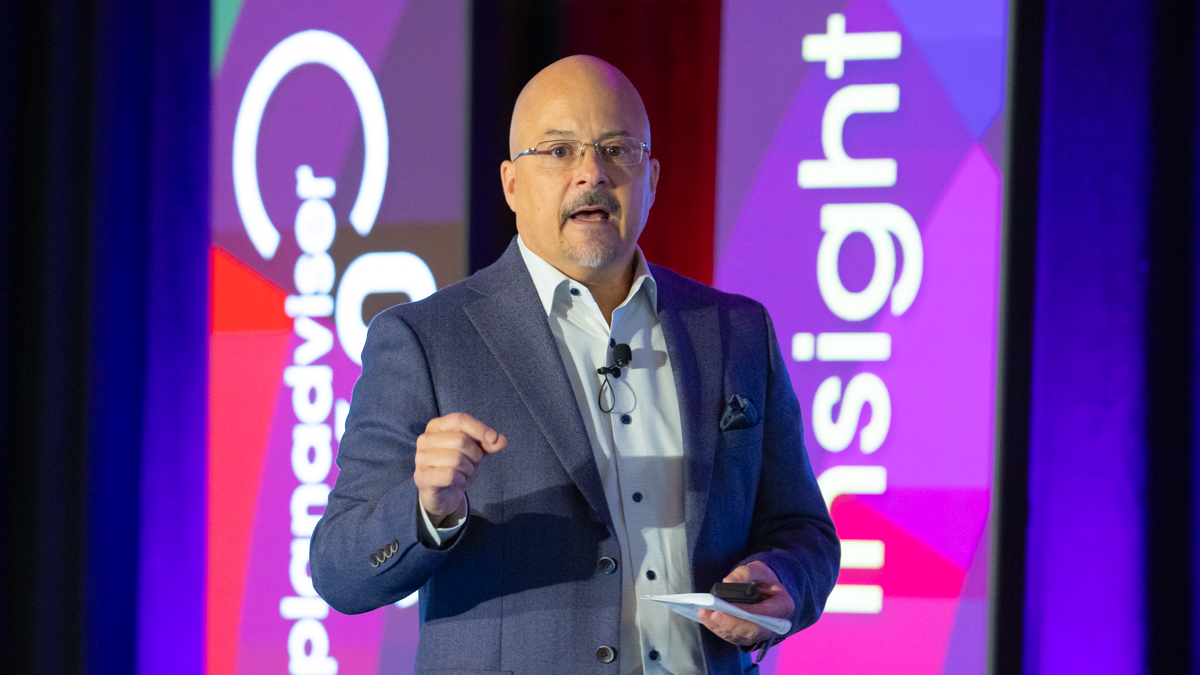
A sweeping Democratic victory in the 2026 midterm elections, and the largest number of first-term members of Congress since 1933, could alter retirement policy in Washington. But advisers should not expect major legislation to move quickly, according to Lance Schoening, Principal’s director of policy, government relations, who spoke at the 2026 PLANADVISER 360 Conference in Orlando, Florida on Monday.
So far, Schoening has not seen Democratic leaders prioritizing retirement policy, he said.
“Affordability, health insurance—that’s where I think a lot of the floor time is going to be spent,” Schoening said, after his presentation. “They’ll get around to retirement policy, but it’s going to be later in 2027, with an idea of maybe 2028 [for] formal development.”
Given that retirement policy is not the first priority of the incoming Democratic leadership, Schoening said he hopes the current lame-duck Congress can pass the Incentivizing New Ventures and Economic Strength Through Capital Formation Act [INVEST Act], which passed the House of Representatives in December 2025 but has not advanced in the Senate.
“The Senate has been the blocking point, but only because of limited floor time,” Schoening said. “Hope that we can get this across the finish line, because the prospects don’t look good next year.”
In particular, the INVEST Act includes a measure that would expand the use of collective investment trusts in 403(b) plans, but he noted that that could be more difficult to pass under new congressional leadership, who have called for stricter regulation of CITs.
“We may be contending with [Representative] Maxine Waters[, D-California] being the [House Committee on Financial Services] chair next year, and it’s going to be much more difficult to move that from here,” he said.
The House Rules Committee on Monday considered a standalone bill to enable 403(b) plans to invest using CITs, an indication that House leaders may be planning to bring it to the floor for a vote sometime soon.
The Next Wave of Committee Leaders
The most important implications for retirement policy may stem from leadership changes on key congressional committees expected in the next Congress. Schoening highlighted:
- Senate Committee on Banking: Senator Elizabeth Warren, D-Massachusetts, will “very likely” be the chair, but Senator-elect Sherrod Brown, D-Ohio, could “pull a seniority card,” as he previously served as chair;
- Senate Finance Committee: Senator Rob Wyden, D-Oregon, is “very likely” to be the chair;
- Senate Committee on Health, Education, Labor and Pensions: Senator Bernie Sanders, I-Vermont, who caucuses with Democrats, is “very likely” the next chair;
- House Committee on Financial Services: Waters is being challenged by Representatives Sean Casten, D-Illinois, and Bill Foster, D-Illinois; and
- House Ways and Means Committee: Representative Richard Neal, D-Massachusetts, is “very likely” the next chair.
Potential Expansion of Retirement Plans
Schoening pointed to growing bipartisan interest in expanding workplace retirement savings programs. Neal has backed a mandate for national retirement plan coverage through individual retirement accounts, which would require workers without employer-sponsored plans to be automatically enrolled in the federal Thrift Savings Plan. President Donald Trump has supported broader retirement coverage initiatives, ordering creation of the website TrumpIRA.gov as a marketplace for IRA providers, and expressing interest in the Australian superannuation system, a compulsory retirement saving system.
“Research has shown that the states [that] have implemented a mandate—this auto[matic]-IRA mandate—in the couple of years following that mandate, we see a 30% increase in 401(k) startups,” Schoening told the audience.
Despite the increase in new 401(k) plans, Schoening suggested that the auto-IRA programs themselves have shortcomings as long-term retirement savings tools. He said no state auto-IRA programs have achieved an average account balance of even $3,000, with many participants instead treating the accounts more like emergency savings.
Looking ahead, Schoening said, lawmakers could eventually package several retirement-related proposals into a future “SECURE [Setting Every Community Up for Retirement Enhancement] 3.0” bill. Among the ideas gaining attention are expanding retirement access for gig workers, increasing retirement plan startup tax credits for small employers, lowering the minimum age for plan participation to 18 from 21 and allowing caregivers who have left the workforce to make enhanced catch-up contributions after returning to work.
Saver’s Match, Fiduciary Advice
Schoening told the group, industry participants are closely watching implementation of the Saver’s Match, a SECURE 2.0 provision that takes effect in the 2027 tax year, that replaces the Saver’s Credit and will provide a government matching contribution for lower-income savers. After reviewing participant data, Schoening said, Principal found significant demand for the benefit.
“We looked at the data—400,000 participants would qualify for [a full or partial] match. That is sizable,” he said. “That is a very vulnerable population out here that is actually taking the step to save.”
One potential flashpoint involves the designation of a “fiduciary,” which was last addressed by a rule from the Biden administration’s Department of Labor and was repealed by the Trump administration. Schoening said Representative Bobby Scott, D-Virginia, who is a potential chair of the House Committee on Education and Workforce, in the next Congress has addressed the issue in the bill he previously introduced, the Workers Retirement Savings Protection Act.
“It would basically say, any advice that’s individualized, and there’s some form of payment, is fiduciary advice,” Schoening said, warning that the proposal could have far-reaching consequences for compensation structures and adviser business models. “When you’re talking about compensation models and things, this would create a huge amount of havoc.”
« Anne Lester Explains How Private Market Assets Fit Into 401(k) Plans