Want the latest retirement plan adviser news and insights? Sign up for PLANADVISER newsletters.
In Practice April 24, 2026
The Right Mindset for Organic Growth
Marketing and psychology know-how can help advisers gain more clients, according to growth strategists Dan Allison and David DeCelle.
Reported by
Edward Rueda


Registered investment advisers may not turn to psychology when they want to grow their business, but it is top of mind for Dan Allison, managing partner of Integrity, and David DeCelle, co-founder of and chief partnerships officer at WealthReach. Allison pivoted from a career in clinical psychology to studying the behavior of financial client referrals and helping midsize and large RIAs with growth strategies. He then hired DeCelle as a marketing consultant and realized DeCelle’s techniques for authentic advertising and attracting clients fit well with his methods for cultivating client referrals.
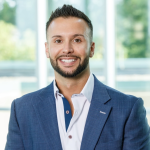
David DeCelle
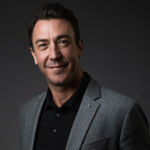
Dan Allison
“I was the student and [DeCelle] was the coach,” Allison says. “Very quickly, we realized we believe the same things about organic growth in the industry, and we began to work together.”
Allison and DeCelle spoke with PLANADVISER about the recent book they co-authored, “Organic Growth Revolution: A Systematic Approach for Organic Growth for Financial Advisers.” This interview has been edited for length.
PLANADVISER: The first part of your book is about marketing and building a client base. How can advisory firms improve their messaging?
David DeCelle: Too much of advisory marketing is very general, and too many firms are just generalists. When you’re trying to appeal to everyone—“comprehensive wealth management,” fiduciary-style language—you actually appeal to no one, and you become invisible, lost in the noise of the industry.
I don’t think a lot of consumers are Googling “comprehensive, holistic wealth management firm with a fiduciary business model.” They’re saying, “What do I do with this 401(k)?” Your content needs to speak to those people, so when they find you, they think, “I found a place that solves my problem.”
Dan Allison: Drilling down and truly being a content expert for an identifiable population of people takes consistency, repetition. It must be everywhere, from how you [discuss] what do you do for a living, to what your website says, to the content you post, to the webinars you do.
Firms always tell me, “This is who we want to work with.” But I ask, “Why do they want to work with you?” Within 20 miles, there are 1,000 people with the same title in their career who can also say “comprehensive” and “holistic.”
DeCelle: One of my [adviser] clients, as an example, worked with a guy from Amazon, helped make sense of the [restricted stock units] that he had, and [my client] got a lot of fulfillment out of that. So he’s like, “I want to work with other people at Amazon that have the same problem.” He focused on that, he created content around that, and he spoke directly to people at Amazon with RSUs. As an individual adviser, not part of a massive team, he brought on $38 million over 12 months of new assets from that niche. Whereas the previous year, he brought on just over $10 million from general clients.
PLANADVISER: The second part of your book is about increasing client referrals. Do advisers need a change in mindset?
Allison: Some of the best firms that I’ve worked with, who are the embodiment of the fiduciary standard—they are the most sensitive talking to clients about [referrals]. They see it as salesy or desperate, so it’s a very big mental roadblock.
DeCelle: Before you can gather assets, you first need to be helpful to people. Any time we come across firms talking about growth, it’s revenue increases, new [assets under management]—it’s all about numbers. If you have 500 clients and you want to grow 10% organically—let’s just say it’s $1 million per client, on average—you want to grow by $50 million. Well, instead, what if you said, ‘We want to help 50 more people this year’? It starts to feel authentic and not a strategy to grow. The heads nod in the room, like, “Oh yeah, we should think that way. That’s why we got into the business in the first place.” Our job, frankly, is to remind them of that, to be helpful.
PLANADVISER: You say many clients may not be aware that their advisers want more business. How are clients getting that impression?
Allison: The average client only understands about 20% to 30% of the services that are available through the firm. You have comprehensive wealth management firms that have a laundry list of services, but [at] the client level, [understanding is] incredibly limited. Clients need what we call “cross-education”: We educate them about all the great things we do, about what to expect as a client, when they’re [still] a prospect.
We find that 50% of the people that we interview believe their advisers [are] at or over capacity. That is often a byproduct of a client saying, “How’s business?” [and the adviser responding] “It’s crazy busy.” We’re trying to project success, and it comes off as overload. If you think about the implication of 50% of your clients thinking you won’t even take new clients, that’s not a difficult conversation for a service industry to have.
After [advisers] get the [client] feedback that we teach them to get—and the client is very positive about their experience—even then, the adviser gets nervous to say, “I’m glad you’re having that kind of experience, and so you know, we do have capacity to bring on another five or six families.” [Make] every client know you have capacity to help people.