
For more stories like this, sign up for the PLANADVISERdash daily newsletter.
Data & Research December 10, 2025
EBRI: DC Plan Loans Correspond to Health Care Spending
Health expenditures increased by at least 10% the same year in 51% of households in which a retirement plan participant took a plan loan.
Reported by Emily Boyle
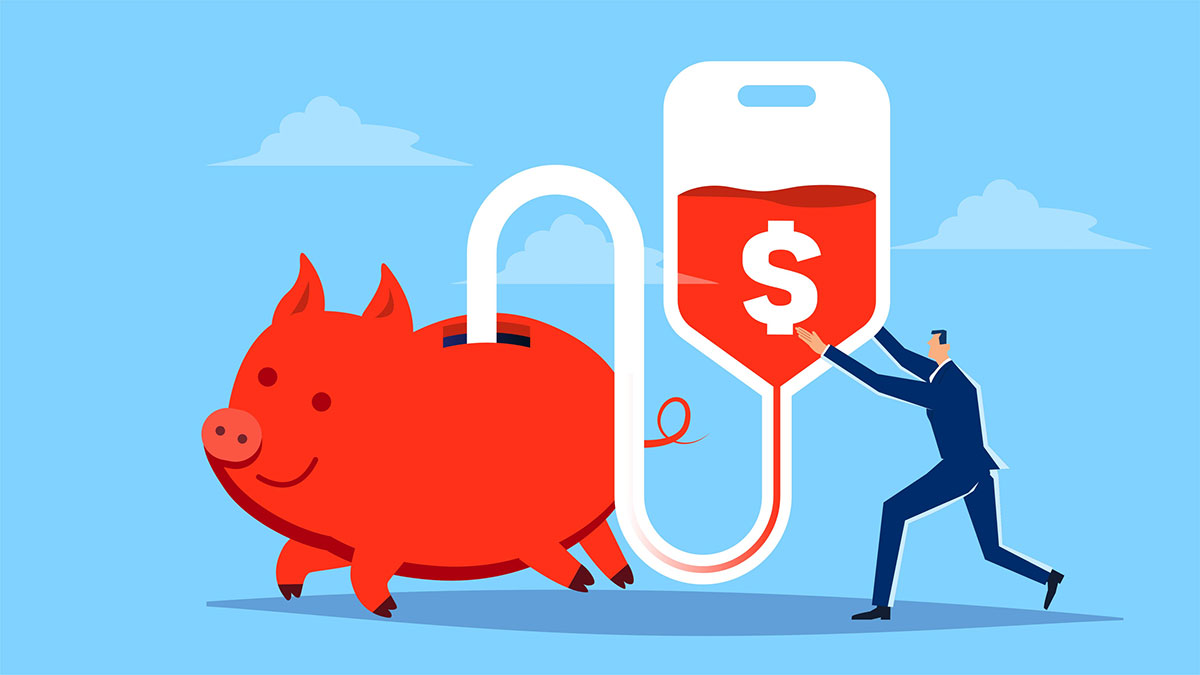
Participants who took loans from their 401(k) plans in 2021 and 2022 may have used them to finance heightened health care expenditures, according to an issue brief from the Employee Benefits Research Institute, released December 4.
Among those participants with a new 401(k) plan loan, health care was the most likely of 12 spending categories to have increased, as 51% of households with a participant who took a loan increased their health care spending by at least 10% in the year during which they took the loan. In households that did not take a new loan, health spending was likely to have increased for almost half (47.8%) of respondents.
“In many cases, [participants] are taking plan loans because they need another place for liquidity,” says Craig Copeland, EBRI’s director of wealth benefits research. “Participants seeking resources to cover expenses ask, ‘Where do I go? Where do I have another stack of money?’”
Health Care as a Financial Stressor
The report stated that loan usage increased among those with higher credit card utilization, an indicator of households more likely to be financially stressed. Age was also a factor: In financially stressed households in which retirement plan participants were age 50 or older, 58.7% experienced health care spending increases. Meanwhile, 52.5% of older households that did not report taking loans also did not report health care spending increases.
Copeland says participants may have taken the loans because they anticipated heftier health care expenses in the future or needed to pay off current expenses.
While a spending increase may not have surpassed the 10% threshold, it still may have “altered the composition of spending among the households,” the report found.
EBRI compared the composition of total spending that each category represented in the year a loan was taken and in the prior year, to see whether any spending category’s share increased by at least 5 percentage points. The spending categories most likely to have risen were unspecified cash spending (22.8% of households), followed by housing (21%) and health care (19.7%).
Health Care’s Effect on Retirement Preparedness
According to a 2025 health care survey by the Nationwide Retirement Institute, more than half (55%) of American adults said they were concerned that health care costs will cause them to delay to their plans to retire or stay retired, with 51% reporting that medical expenses have drastically reduced how much they saved or will be able to save in retirement.
This past year, 41% of insured survey respondents reported skipping health care appointments due to rising costs. Nearly one-third (31%) of all respondents said they cannot afford an unexpected $500 medical bill, and almost two-thirds (66%) said they cannot estimate what those costs will total over their lifetime.
According to Copeland, there is a critical difference between the reason participants spend money on housing and why they spend on health care.
“The housing looks like it’s more planned—[participants] need money for a down payment,” Copeland says. “Health care is more: Something happens [unexpectedly], and they need money.”
“[EBRI’s findings] should surprise no one,” wrote Ghilarducci. “For years, researchers have documented that 401(k)s and IRAs function less as retirement security vehicles and more as emergency piggy banks for struggling families.”
According the EBRI study, household income did not appear to have an impact on the likelihood of a plan loan being taken, as the proportion taking a loan in each income group was between 9% and 10%. Participants with the smallest account balances had the lowest likelihood of taking a loan, but once the account balance reached $10,000, the likelihood of taking a loan was similar through balances of $100,000 or more.
Ghilarducci wrote that in that her own research, however, she and her colleagues found that economic shocks such as job loss, divorce and health crises drive one-fifth of all retirement account withdrawals, with low-income workers disproportionately affected.
The study also found that participants in households with higher credit card usage had lower average rates of contribution to their 401(k) account. For example, for participants in their 50s, those from higher-credit-card-utilization households had an average contribution rate of 5.6%, compared with 7.6% for those with lower credit card utilization. Lower average contribution rates, in turn, lead to lower average balances among those with high credit card utilization across all age groups and generations.
To help participants avoid having to take plan loans, Copeland recommends that plan sponsors encourage participants to have liquid forms of savings, such as health care flexible spending accounts, health savings accounts (if eligible, through a high-deductible health plan) and emergency savings accounts.
EBRI’s report concluded that prohibiting plan loans, however, is not necessarily a solution to the issue.
“Instead of putting [debt] on a credit card, it’s cheaper in most cases to take a loan from your 401(k) plan,” Copeland says. “You’re not paying a 20% interest rate to your plan loan.”