
Want the latest retirement plan adviser news and insights? Sign up for PLANADVISER newsletters.
Compliance November 19, 2026
SECURE 2.0 Provisions Your Clients Should Know
Industry compliance leaders say emergency savings and student loan matching are among the optional provisions requiring the most attention from plan sponsors.
Reported by
Valentina Baez


Implementing provisions of the SECURE 2.0 Act of 2022 can help address participants’ financial challenges, but industry experts say plan advisers and sponsors must balance those potential benefits against administrative complexity and operational realities.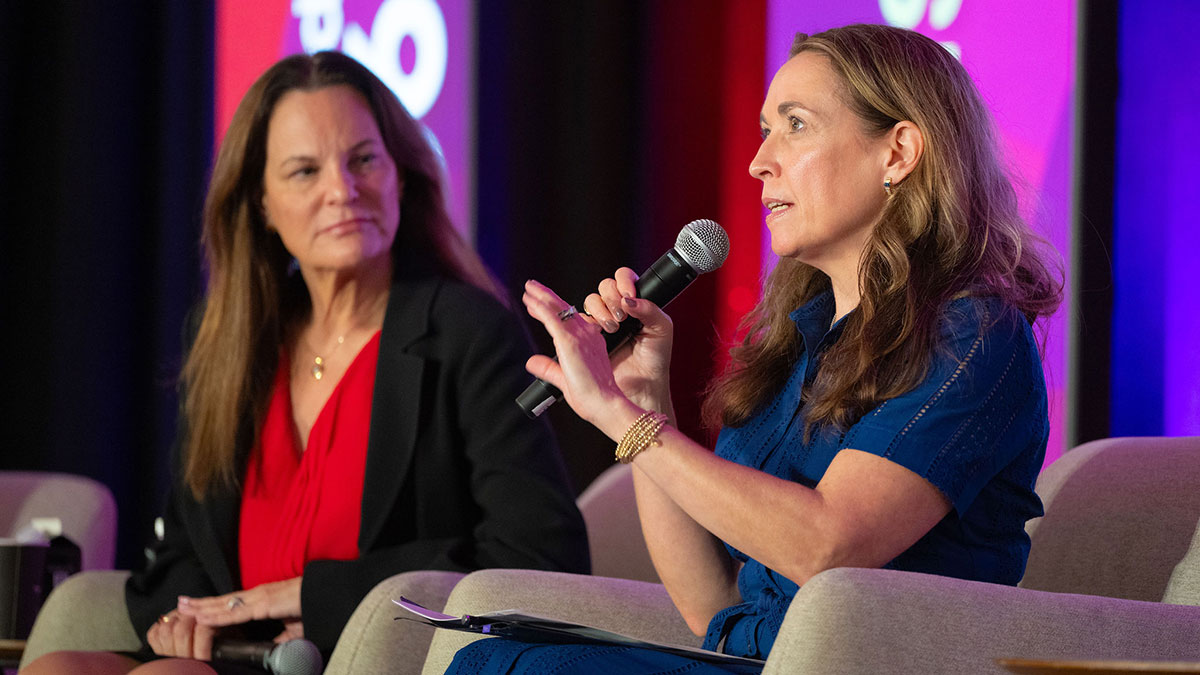
During a panel discussion at the 2026 PLANADVISER 360 Conference in Orlando, Florida last week, “SECURE Acts, Smarter Plans,” speakers said plan sponsors are increasingly interested in provisions tied to broader financial wellness, though actual implementation has lagged as employers assess workforce needs, technology capabilities and compliance obligations.
Four years after SECURE 2.0 became law, panelists pointed to emergency savings accounts and student loan matching as some of the most significant optional provisions for employers to consider. But they emphasized that a provision’s value depends on whether employers can effectively administer it and whether it addresses actual participant needs.
Nikki Pirello, COO of the Defined Contribution Institutional Investment Association, said plan sponsors initially focused on complying with the SECURE 2.0’s core requirements but are now turning their attention to optional features aimed at improving employees’ financial wellbeing. “There is a renewed focus on what I would call broader financial wellness, … the ‘nice to haves.’ … An example is emergency savings,” she said to the audience. “We are seeing more interest and … more uptake in that.”
Employees’ Needs Drive Provision Selection
While interest in financial wellness features is increasing, John Bartlett, director of retirement services at CFS Investment Advisory Services, said sponsors should determine the level of employee demand for new benefits before moving forward with implementation.
“Some benefits are very appealing on paper, but does that mean it’s easy to operate?” he said. “Just putting it into a plan document doesn’t mean it’s also going to be well-utilized. … Plan sponsors need to focus on … understanding what your base really needs.”
While advisers are not typically responsible for the plan document or setting up benefits, Bartlett says advisers should help sponsors understand their employees’ needs.
“You are the person that the client’s going to go to for communication,” said Barlett. “You need to have a firm understanding and know the people just as well as plan sponsors do.”
Implementation Matters
Bartlett said advisers should also have a clear understanding of how potential plan changes would affect operations before sponsors decide to adopt them.
He recommended that advisers and sponsors evaluate how proposed features would function in practice and whether their service providers can support them.
Advisers could consider, according to Bartlett, “Are your partners, that you’re currently working with, able to support the changes you want to make? … Do they have the technology and capabilities to support certain features?”
One example Bartlett cited is the SECURE 2.0 provision allowing sponsors to provide matching contributions on participants’ Roth individual retirement account contributions. Whether a sponsor can implement such a feature may depend on a recordkeeper’s capabilities, he said.
“[An adviser] could write it in, but the recordkeeper may not be able to implement such a change. Some certainly can, but some cannot. You have to have these conversations, and as the adviser, you need to be aware of what [ system the recordkeeper’s] using,” he said.
Marcia Wagner, founder and managing partner at Wagner Law Group, echoed Barlett, saying that operational issues, including payroll coordination, recordkeeping, eligibility tracking and plan documentation, can create compliance risks if not carefully managed.
She also emphasized the importance of understanding a sponsor’s workforce demographics and participant needs before evaluating which SECURE 2.0 provisions may be appropriate.
“The decision … to add student[-loan related] savings or emergency [savings] or longevity benefits, that itself is a settlor function. Once the plan sponsor that you all represent makes that decision to implement or not implement any particular option … there is no fiduciary liability on that particular decision at all,” said Wagner. “However, the implementation of that decision is a non-settlor function, which is a fiduciary function, and that is where … the devil is in the details.”
Once a sponsor decides to implement a benefit, advisers must consider operational complexity, fees and ongoing monitoring requirements, Wagner said. For example, an emergency savings account feature requires sponsors to determine which participants are eligible and when that eligibility may change.
“Then with respect to the student loan matching issue, I think that’s a great idea … However, especially for younger people that have debt and can’t put into their retirement … there’s great complexity” Wagner said. “You’ve got to make sure that the [participants] are actually paying their student loans.”
Looking ahead, Pirello said emergency savings programs could ultimately have the greatest impact on participant outcomes.
While adoption remains gradual, she argued that the retirement industry is increasingly focused on helping workers not only accumulate savings but also manage financial emergencies.




« Advisers Catch the Ripple Effect as Fee, Underperformance Litigation Increases