
Want the latest retirement plan adviser news and insights? Sign up for PLANADVISER newsletters.
In Practice November 24, 2025
Speaking the Languages of Different Generations
Whether it’s through a podcast, webinar or in-person conference, each generation receives information differently, and marketing whiz Rebecca Hourihan knows how advisers can deliver it to them all.
Reported by
Valentina Baez

When planning a communication campaign, it makes all the difference whether your client would prefer an in-depth report, a webinar or podcast, or an in-person meeting alongside a golfing session.
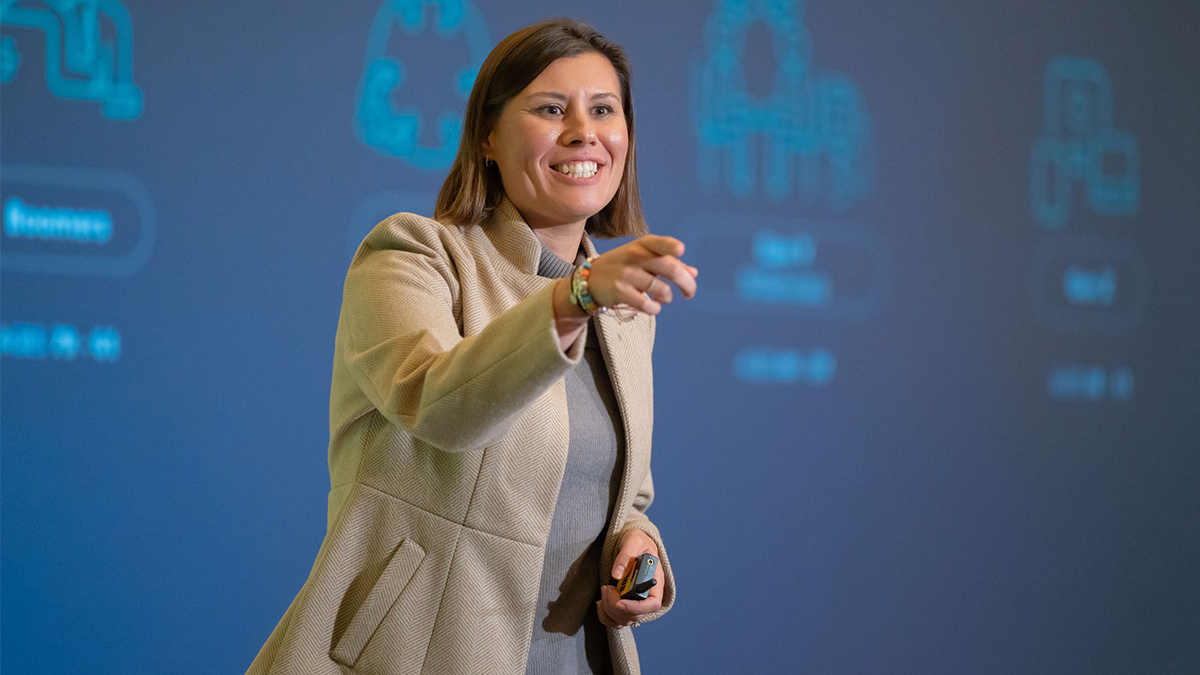
The success of a campaign relies on knowing your audience and sticking to common marketing principles, noted Rebecca Hourihan, founder and chief marketing officer at 401(k) Marketing, November 4, at this year’s PLANADVISER 360 Conference in Scottsdale, Arizona.
Hourihan introduced four essential steps for advisers and their firms to follow and explained how to tailor their approach for clients in each of three generations.
4 Steps of Marketing
Creating awareness about your business is the first building block, Hourihan said. Whether through local events, community groups, social media ads or blog postings, it is important to create a buzz within plan sponsor communities and, through them, potential participants.
The next step along the marketing pipeline is generating interest, which can be done through outreach such as organized educational workshops or newsletter campaigns. Advisers can target content to potential clients’ specific concerns, such as why employees are delaying retirement or what income solutions are available for participants.
“Maybe you have a podcast, a webinar—some sort of content, that, when these curious prospects visit your website, they’re going: ‘They can help me with my problem,’” she said.
The third step is to make a decision, when advisers meet in-person with the prospective client. Both advisers and clients need to determine whether they are a good fit or not, she said. On the adviser’s side, this means holding discovery meetings, proposal presentations, and/or virtual plan reviews, maybe making benchmarking tools accessible for prospects.
The final step is taking action, when the client agrees to work with the adviser. It is important to understand how the client is being onboarded and informed—for example “are a million signatures [needed], a million checkboxes, or is it more of a seamless experience?” Hourihan said.
Learning the Language of Your Audience
Breaking a marketing campaign down by those four steps is useful for measuring its success. In addition, advisers should know who their target audience is and how it best receives information.
Hourihan spoke of three hypothetical clients, representing the three generations with employees most apt to be running their company plan: Jim, a Baby Boomer, Robert from Generation X and Kimberly, an older Millennial. Each client, depending on the person’s age and comfort with digital content, should be approached differently, according to Hourihan.
For example, she said, if Jim “recognizes that his employees aren’t retiring,” then the adviser’s best option would likely be to meet him in person to discuss what can be done.
Robert, however, might want a more digital-forward approach. Keep in mind that “Gen Xers are what we call the ‘skeptics’ generation,’” Hourihan said. Gen X clients are often comfortable with either digital or nondigital communication but want their information—whichever way it’s supplied—to be in depth.
Kimberly, as a Millennial and fully immersed in the digital world, is likely to value instant communication and accessibility.
“She’s used to being on her phone at all times. She wants to have that information when she is ready,” Hourihan said. This means clients such as Kimberly may want to meet through video calls and prefer podcasts and webinars over long reports.
While Gen Z may not be at the client level yet, advisers meanwhile can apply the strategies they use with Millennials to that group, as Gen Z represents a growing percentage of the labor market.