
Preparing Americans for a Dignified Retirement
The new president of Nationwide Retirement Solutions discusses his strategic vision and the role of advisers.
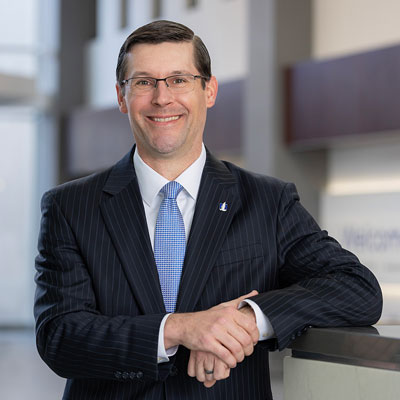
Kevin Jestice
Kevin Jestice, in his new role of president of Nationwide Retirement Solutions, says his strategic vision for the group ‘is focused on how to drive better retirement outcomes for Main Street America by connecting them to the savings and investing behaviors historically reserved for Wall Street.’
“How do we help Americans save for, prepare for and thrive in a dignified retirement?” he queries.
Jestice says this mission is personal for him. He recalls when he was in high school and changes in his father’s job moved him into a defined contribution plan from a defined benefit pension plan. In this time before the proliferation of computers and online processes, his father was given packets of information and a paper enrollment form to fill out. Since Jestice was taking a business class in high school, his father asked for his help.
Jestice also recalls how much he had to help his mother with getting life insurance and other assets when his father passed away.
“It was a really daunting experience for me as an 18- and 19-year-old to go through these processes,” he says. “It actually changed my professional desire. I went from thinking I was going to be a pre-law undergrad to getting a finance degree and then trying to work my way to Wall Street to figure out how to make this system work for people like my family on Main Street.”
Jestice notes that Nationwide, which will celebrate its 100-year anniversary in 2026, has deep roots in Main Street America.
“We were a rural automotive insurer from our roots,” he says. “We have a connection to everyday Americans, and that affects the way we deliver on our company mission, which is to protect people, businesses and futures with extraordinary care. In our retirement business, we do that by serving and protecting most people’s greatest asset from what is now their greatest fear: A recent Nationwide Retirement Institute Survey finds 74% of Americans fear running out of money before they run out of time.”
Factors Drive Need for Income Solutions
Nationwide has found Americans economic uncertainty goes beyond just retirement savings. Its 2025 Economic Impact Survey showed that 40% of respondents said they delayed or canceled plans for major purchases because of economic conditions this year—things like postponing a vacation or purchasing a car. In addition, 21% of consumers said they have delayed or canceled plans for major life milestones—getting married, having children or retiring.
“We see Americans live on paychecks—not a large sum of money in an account—and fewer are covered by a defined benefit plan than before, which leads to concern about steady, reliable income in retirement,” Jestice says.
Jestice cites a statistic that fewer than 15% of Americans have access to a defined benefit plan1. With the switch to DC from DB, the risk of not having enough income in retirement is now on the saver instead of their employer.
“When the employer ran the defined benefit plan, they took on the risk of market volatility, and they promised a paycheck,” Jestice says. “[Nationwide] also has a growing pension risk transfer business, so we see that unwinding and the shrinking of the DB plan market. That trend is going to continue.”
Jestice says a Nationwide survey found 58% of employees are worried that market volatility would cause them to outlive their retirement savings, and 88% wish their retirement plan offered a monthly source of income that would last for life.
“People still think about and budget their lives around that monthly income stream,” he says.
The Role of Advisers
Advisers can help design plans to match that need and lessen employees’ anxiety, according to Jestice.
“There are three important things participants need to do: enroll in the plan, save enough in the plan, and invest it properly,” Jestice says. “If we help them do those three things really, really well, it will set most of them up for a good, dignified retirement.”
He says advisers play a crucial role in helping plan sponsors design a plan in which it is easy for participants to do those things.
“It sounds easy, right? But saving enough, that’s really difficult, particularly with the economic challenges I mentioned,” Jestice says.
He adds that advisers also play a role in educating participants on how to really get the most out of their plan. Then it’s important to protect their assets.
To help plan sponsors determine whether their participant base needs a protected retirement income solution, Jestice suggests that retirement plan advisers start with the basics.
“Ask whether employees have enough guaranteed income, be it through a defined benefit pension or Social Security, to cover their essentials in retirement,” Jestice says. “It’s important to define what are the essentials in retirement.”
“The reality is that a lot of people have a lot of expenses they carry into retirement—such as a mortgage, maybe property taxes, things like health care costs, homeowner’s insurance, maybe a car payment—[in addition to] basic things like groceries and utilities,” Jestice notes. “These are fixed expenses in retirement, and making sure there is enough guaranteed income to cover the fixed expenses will help employees sleep at night.”
If an adviser feels the employee base does not have enough guaranteed income to cover these essentials, then it may be worth exploring ways to help close the gap—such as offering lifetime income funds that can be added to an employer-sponsored retirement plan’s investment lineup. Participant demand supports this, as well.
“Per the survey I referenced before, 88% of Americans say they want investments generating retirement income for life,” Jestice says. “In fact, 43% say generating income for life is most important to them when it comes to their retirement savings, while 20% say investments that protect savings from market drop right before retirement is most important. So there’s a lot of anxiety from people, especially in the pre-retiree years—the 55-to-65 age range.”
Before adding a retirement income solution, advisers and their plan sponsor clients should determine what solutions are available, according to Jestice. They also need to have a clear understanding of the product guarantees and expenses; if annuitization is required versus maintaining full liquidity; and optional features such as spousal protection.
“The financial credibility and reputation of the insurer—having a strong, stable, long-term committed insurer—is really important,” Jestice says.
Other things advisers should look for are not product specific, but relate to the participant’s experience.
“Is education provided? Are there income planning tools and calculators?” Jestice asks. “Look for the ability to offer advice to create long-term financial plans for participants and the ability to engage with participants throughout their entire life cycle so they stay tuned in to get the most out of their lifetime income solution.”
Nationwide’s Solutions
Jestice says Nationwide has multiple in-plan lifetime income solutions in the market, both through plans for which Nationwide is the recordkeeper and on the platforms of several other recordkeepers.
“As an enterprise, we’re an insurer, a fund manager and a recordkeeper, so we have multiple tools and capabilities we can bring to advisers, plan sponsors and participants,” Jestice says. “Importantly, we have the end-to-end expertise in these solutions for our customers.”
Jestice also points out that Nationwide has financial stability.
“We are a 100-year-old company,” he says. “We have incredibly strong risk management capabilities as a leading insurance company, and that really matters when you’re making promises to participants for decades.”
Nationwide offers a suite of lifetime income solutions, each structured as target-date fund collective investment trusts. This means they are institutionally priced and can serve as a plan’s qualified default investment alternative. Jestice adds that Nationwide’s solutions prioritize full participant liquidity.
“We can give people access to a reliable, dependable income stream in retirement in a variety of ways with a variety of solutions, while making sure that, ultimately, the participant experience is simple and flexible,” he says. — Rebecca Moore
Guarantees are subject to the claims-paying ability of the issuing insurance company.
Provisions of these options may vary based on plan selection and/or by state regulation. These investment options may not be available in all states.
1TED: The Economics Daily, U.S Bureau of Labor Statistics on Private Sector Workers (June, 2025)
PNM-23289AO (12/25)