
For more stories like this, sign up for the PLANADVISERdash daily newsletter.
In Practice November 23, 2026
What Seasoned Plan Advisers Wished They Knew When Starting Their Practice
Longtime advisers at the 2026 PLANADVISER 360 Conference shared how they gained confidence at work and met their clients’ evolving needs.
Reported by
Edward Rueda

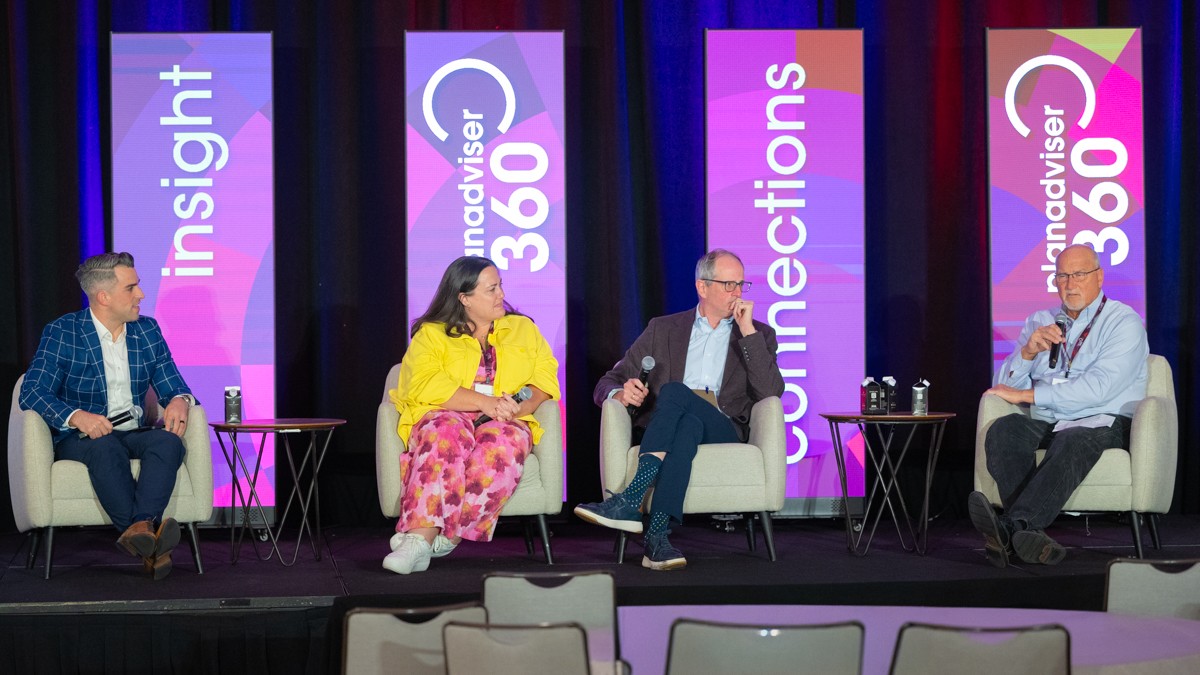
Success in the retirement industry does not require knowing everything from the outset, according to the speakers on the “What I Wish I Knew Earlier” panel at this month’s 2026 PLANADVISER 360 Conference in Orlando, Florida.
Chuck Williams, CEO and co-founder of Finspire LLC, told the audience he entered the retirement-plan market with a background in wealth management. At first, he needed to learn about retirement plan administration and the complexities of the Employee Retirement Income Security Act, but he also realized he brought valuable experience.
“You have the administration, the investments and the employee education and communication. I didn’t know anything about administration, but the other two I knew I could do,” Williams said. “That lit the fire in me and kept me going.”
Brea Dantin, retirement plan adviser at Shepherd Financial and another panelist, entered the industry with an unrelated degree in Spanish. She remembered feeling like she was going to “pass out” during her first retirement plan committee meeting, thinking everyone knew more than she did, but she eventually gained her footing through experience, mentorship and reading about the field.
“I always thought [plan administrators] wanted me to be the smartest person in the room,” Dantin said. “I realized that was just my brain telling me that I had to know right then the answer to every question. I think from the [clients’] perspective, what they wanted was to offer a 401(k).”
The panelists recommended that early-career advisers focus on continual learning, rather than projecting expertise to clients.
“Being able to say [to clients], ‘Yeah, I don’t know, but I’ll get back to you,’ I think that’s a very valuable lesson,” said John Bartlett, director of retirement services at CFS Investment Advisory Services, and the panel moderator.
Setting Goals
The panelists also discussed how client expectations have changed over time. While retirement plan committee meetings once focused heavily on investments and fees, advisers increasingly find themselves helping plan sponsors think about employee outcomes.
Dantin said she believes plan sponsors are returning their attention to participants after years in which litigation concerns dominated many fiduciary discussions.
“Instead of asking, ‘How can I stay out of jail?’ or ‘How can I stop the lawsuits?’ they’re saying, ‘What can I do for the employee?’” she said. “That perspective has changed—we started out employee[-focused], we went to lawsuits, now we’re back to the employee.”
Keith Gredys, CEO and president of Kidder Advisers, told the audience that clients are often looking for guidance and validation rather than technical expertise alone.
When discussing relationships with plan sponsors, Gredys said advisers cannot consult effectively without understanding their clients’ organizational goals, business challenges, workforce priorities and retirement strategy “pain points.”
“You can’t consult if you don’t know about their business, what actually drives them, why they do what they do,” Gredys said. “What gets them all jazzed up about showing up for work?”
Williams said he has sometimes had to challenge employers’ assumptions about their plans.
“Our first meeting with a very large client, the CEO was not involved in [the plan committee], but was on this meeting, and said, ‘What do you think we’re doing wrong?’ And I said, ‘You’re not putting enough effort into your 401(k) plan,’” Williams recalled. “It was an uncomfortable thing to say. When I talk to young advisers, I’m like, ‘That’s what [clients] want you to do.’”
Dantin agreed that some of the most influential experiences came from participant interactions rather than committee meetings. She argued that advisers sometimes lose sight of employees’ day-to-day financial realities when discussions become too focused on fiduciary processes and plan design.
“We’re going to stand in front of a room and we’re going to tell them, ‘Save 10% to 15%,’ when they’re going to go home and be like, ‘I don’t have groceries to feed my kids,” she said. “I’m meeting [participants] where they are, instead of judging them about where they’re at. I think that goes a really long way in helping the participants say, ‘OK, I can do this.’”
Advice to Younger Selves
As the session concluded, panelists reflected on the advice they would give to their younger selves.
Dantin’s answer was simple: “You got this. You’ll figure it out. You don’t have to know it all today. And that is still true to this day.”
Gredys stressed the importance of gradual improvement and being open to new prospects.
“Learn something new every day and apply it—because we all know the power of compounding,” Gredys said. “Allow life to take you where you need to go. Be flexible on that, because there’s going to be opportunities that come your way.”
Williams encouraged advisers to remember the long-term impact they can have on participants, even when that impact is invisible.
“Don’t underestimate the impact you’re having on a person who’s never going to thank you for it. You’ll never see what happens, but realize it is real,” Williams said.